
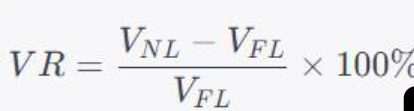
A voltage regulator keeps a power supply’s output within a range that connected equipment can use. It helps maintain a stable output when the input voltage or the load changes.
Regulators are used in everything from small electronic circuits to vehicle charging systems and power supplies. The best type depends on the input and output voltages, the load current, heat, efficiency, and how much electrical noise the application can tolerate.
How voltage regulation works
A regulator compares the output voltage with a reference value. If the output drifts, a control circuit adjusts how power reaches the load to bring the voltage back toward its target.
A regulator can only operate within its design limits. For example, it may have a maximum input voltage, a maximum output current, and a minimum input-to-output voltage difference. It also cannot protect against every supply fault unless it is specifically designed to do so.
Main types of voltage regulators
The two broad categories are linear regulators and switching regulators. Linear regulators control voltage by adjusting a transistor’s operation. Switching regulators rapidly turn a power switch on and off and use components such as inductors and capacitors to transfer and smooth energy.
Linear voltage regulators
A linear regulator uses a transistor as a variable pass element. A control circuit adjusts the transistor to maintain the desired output voltage. Linear regulators are often simple to use and produce low output ripple and noise.
Their main drawback is heat. The power dissipated is approximately:
P = (Vin − Vout) × Iout
For example, dropping 12 V to 5 V at 0.2 A dissipates about 1.4 W as heat. The actual result depends on the regulator and circuit, but this illustrates why large voltage drops or high currents can require thermal planning.
A linear regulator can step voltage down, but it cannot raise the output above the input. It also needs sufficient input-to-output voltage headroom to regulate. A low-dropout (LDO) regulator is a type of linear regulator designed to operate with a smaller voltage difference between input and output. (Analog Devices: Linear regulator basics)
Series regulators
In a series regulator, the pass transistor sits in series between the input supply and the load. The regulator adjusts how much voltage is dropped across that transistor to keep the load voltage steady.
Most integrated linear regulators use this general approach.
Shunt regulators
A shunt regulator is connected in parallel with the load. It controls the output voltage by drawing more or less current away from the load. A series resistor or another current-limiting element is normally needed to limit the total current from the supply.
A Zener diode can serve as a simple shunt regulator: when operated in its breakdown region, it holds a roughly constant voltage across itself. The design must account for supply variation, load current, and Zener power dissipation.
Switching voltage regulators
A switching regulator controls power by rapidly switching a transistor on and off. An inductor and capacitors store and transfer energy, while feedback adjusts the switching pattern to keep the output near its target.
Switching designs are often more efficient than linear regulators, especially when the input-to-output voltage difference or load current is large. They can also step a voltage up, step it down, or produce an inverted output, depending on the circuit topology. (Analog Devices: Switching regulator overview)
Common switching types include:
- Buck converter: Steps the input voltage down.
- Boost converter: Steps the input voltage up.
- Buck-boost converter: Can provide an output above or below the input, depending on its design.
- Inverting converter: Produces an output with the opposite polarity.
Switching regulators require more design attention than many linear regulators. Their switching action can create ripple and electromagnetic interference (EMI), so component choice, circuit layout, and filtering matter.
Linear vs. switching regulators
| Feature | Linear regulator | Switching regulator |
|---|---|---|
| Typical strengths | Simple circuit, low ripple and noise | High efficiency, flexible voltage conversion |
| Main tradeoff | Can produce significant heat | More components and switching noise |
| Voltage conversion | Steps down | Can step down, step up, or invert |
| Often a good fit | Low-noise, modest-power circuits | Higher current or larger voltage changes |
These are general tendencies; performance depends on the specific regulator and how it is used. In some designs, a switching regulator handles most of the voltage conversion and a linear regulator provides a quieter final output. (Analog Devices: Linear regulators and switching supplies)
Zener diodes in regulator circuits
A Zener diode can provide a voltage reference in a regulator. In a simple shunt circuit, a resistor limits current while the Zener diode holds the output near its rated breakdown voltage. In a transistor series regulator, a Zener may provide a reference voltage for the transistor’s control circuit.
A Zener diode does not regulate safely by itself in every situation. The circuit must keep its current within the device’s specified operating range and limit its power dissipation.
Common applications
Voltage regulators are used in:
- Power supplies: Provide stable DC rails for electronic equipment.
- Computers and embedded systems: Supply the different voltages required by processors and other components.
- Automotive systems: Help control voltage in charging and electronic systems.
- Battery-powered devices: Convert a battery’s changing voltage into a suitable supply for the load.
- Power generation and distribution equipment: Support voltage control at different points in electrical systems.
How to choose a voltage regulator
Before selecting a regulator, check:
- Input voltage range: Include the normal minimum and maximum input values.
- Required output voltage and current: Confirm the regulator can supply the load continuously and during startup or brief peaks.
- Efficiency and heat: Estimate regulator power loss and check the manufacturer’s thermal limits.
- Voltage headroom: For a linear regulator, make sure the input stays above the output by at least the required dropout voltage.
- Noise and ripple: Check whether the load is sensitive to switching ripple or other noise.
- Circuit requirements: Follow the datasheet for capacitors, inductor values, layout, and protection features.
Key points
A voltage regulator maintains its output within its specified operating range as the supply or load changes. Linear regulators are often straightforward and quiet, but can waste power as heat. Switching regulators can be more efficient and support more conversion types, but need careful attention to noise and circuit layout. Choose based on the requirements of the complete application, and follow the regulator’s datasheet for design details.